
- About
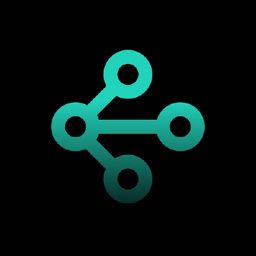
- Build web apps in pure Python.
- Catalogue
- No. 016
- Category
- Development
- Founded
- 2022, San Francisco, California, USA
- GitHub stars
- ★ 28.9k
Overview
Reflex is an open-source, full-stack Python web framework that allows developers to build and deploy web applications using only Python. It provides a seamless way to create reactive user interfaces without the need for JavaScript.
What it does well
Reflex simplifies web development by eliminating the need for separate frontend and backend languages. It offers a declarative syntax for building UIs, automatic state management, and built-in components for rapid development. With Reflex, developers can leverage their Python skills to create full-stack applications, reducing the learning curve and increasing productivity.
Why it’s in the collection
Reflex stands out for its Python-centric approach to web development. It allows developers to build entire web applications, including interactive UIs, using only Python. This unified language approach simplifies the development process, reduces context switching, and makes web development more accessible to Python developers. Reflex's reactive programming model ensures efficient updates and a smooth user experience, while its growing ecosystem provides a range of components and integrations.
On GitHub
- Stars
- 28,948
- Forks
- 1,796
- Commits
- 3,732
- Repository
- reflex-dev/reflex
Languages
- Python 98.3%
- Jinja 0.4%
- JavaScript 0.8%
- Other 0.6%
Compared with
 DjangoComprehensive Python web framework, but requires separate frontend technologies for reactive UIs.
- FFlaskLightweight Python web framework, but needs additional libraries for full-stack reactive applications.
 ReactPopular JavaScript library for building user interfaces, but requires separate backend technology.
 Vue.jsProgressive JavaScript framework, but not integrated with Python for full-stack development.