
OneUptime
- About
- Open-source monitoring, on-call, status pages and observability in one platform. Open-source alternative to PagerDuty, Atlassian Statuspage and Better Stack.
- Catalogue
- No. 432
- Category
- Data & Content
- GitHub stars
- ★ 7.8k
Overview
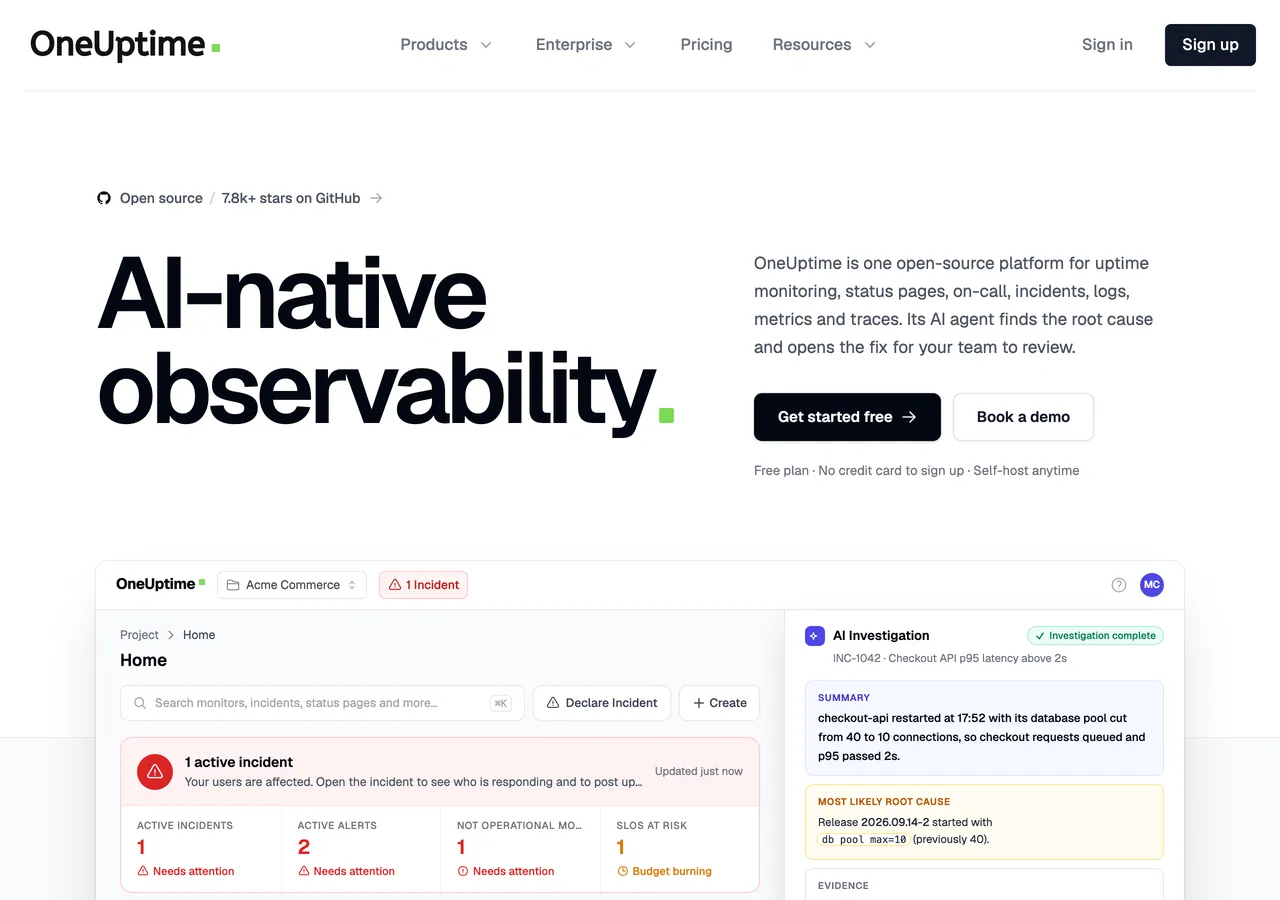
OneUptime is an open-source observability platform. It checks that your websites, APIs and servers work, collects the logs, metrics and traces your apps send, pages whoever is on call when something breaks, and keeps customers informed on status pages. You can use OneUptime Cloud or self-host it with Docker Compose or a Helm chart on Kubernetes.
What it does well
Monitors check websites, APIs, ports, DNS and certificates from probes around the world or inside your network, and also watch servers, Kubernetes and Docker. Incidents are worked on one timeline, with paging by phone, SMS, email, push, Slack or Microsoft Teams and escalation until someone responds. Public or private status pages announce incidents and scheduled maintenance. Logs, metrics and traces arrive through OpenTelemetry, alongside exceptions, profiles and real user monitoring. Workflows connect tools like Jira, an AI feature posts root cause analyses, and an API, CLI, Terraform provider and MCP server automate the rest.
Why it’s in the collection
OneUptime replaces a monitoring tool, an on-call tool and a status page service with one platform you can run yourself.
License
OneUptime is Apache 2.0, except the code in its ee/ directory, which is under the commercial OneUptime Enterprise License.
On GitHub
- Stars
- 7,841
- Forks
- 496
- Commits
- 72,798
- Repository
- OneUptime/oneuptime
Languages
- TypeScript 95.9%
- JavaScript 2%
- EJS 0.9%
- Other 1.2%
Compared with
 PagerDutyCommercial on-call and incident response platform.
 Atlassian StatuspageAtlassian's hosted status page service.
 Better StackCommercial uptime monitoring, status pages and logging.
 DatadogCommercial monitoring and observability platform.
See every open-source alternative to PagerDuty, Atlassian Statuspage and Better Stack in the collection.